


Refer a Patient to Lancaster House Dental Practice
We welcome referrals from dentists throughout London and the surrounding areas.
Our experienced clinicians provide high-quality care in a supportive environment and are happy to accept referrals for:
- Specialist Endodontic Treatment (Root Canal Therapy)
- Periodontal Treatment (Gum therapy)
- Dental Implants
- Minor Oral Surgery
For NHS referrals, please download IMOS referral form from the links below, embed all relevant x-rays, save as a PDF then email to:
Our Commitment to Referring Dentists
We understand the importance of maintaining your relationship with your patient.
- Patients are treated only for the condition referred.
- Detailed reports are sent promptly following assessment and treatment.
- Relevant radiographs, CBCT findings and clinical photographs are provided where appropriate.
- Patients are returned to your care for ongoing treatment and long-term maintenance.
- We are always happy to discuss cases before referral.
How to Refer
Referring a patient is simple. Complete the online referral form below and our team will contact the patient directly to arrange an appointment.
Alternatively, referrals can be made by:
Email:
Telephone: 020 8771 2020
Online Referral Form
Saving teeth that might otherwise need to be removed
Endodontic treatment, commonly known as root canal treatment, is used to treat infection or inflammation inside a tooth. At Lancaster House Dental Practice, we offer advanced endodontic treatment with Dr Yogesh Patel, using modern techniques and equipment to help preserve natural teeth wherever possible.
Treatment may be recommended if you have:
- Persistent toothache or sensitivity
- An infected or abscessed tooth
- Pain when biting or chewing
- A tooth that has previously had root canal treatment but has developed further problems
- A tooth that might otherwise need to be extracted
Find out more about Endodontic Treatment
Dentists: We also accept endodontic referrals from other dental practices.
Helping to save your natural tooth
When the soft tissue inside a tooth – known as the dental pulp – becomes inflamed or infected, it can cause pain and, if left untreated, may eventually lead to the loss of the tooth.
Endodontic treatment, more commonly known as root canal treatment, removes the infection from inside the tooth, cleans and disinfects the root canals and seals the tooth to help prevent further infection.
The aim, wherever possible, is simple: to relieve discomfort and save your natural tooth rather than remove it.
Using modern endodontic techniques, careful assessment and advanced dental technology, our aim is to give teeth with more complex root canal problems the best possible opportunity of being retained.
What is root canal treatment?
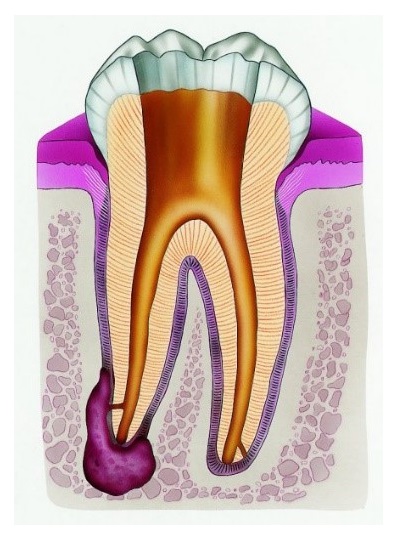
Inside every tooth is a space containing nerves and blood vessels called the pulp. The pulp can become inflamed or infected because of:
- Tooth decay
- A deep filling
- Cracks or fractures
- Trauma to the tooth
- Previous dental treatment
- Failure or reinfection of a previous root canal treatment
- During root canal treatment, the infected or inflamed tissue is carefully removed. The canals inside the roots of the tooth are then cleaned, disinfected, shaped and sealed.
The tooth can then usually be restored so that it can continue to function normally.
When might I need endodontic treatment?
You may be referred for an endodontic assessment if you experience persistent toothache, sensitivity to hot or cold, pain when biting, swelling or an abscess.
Sometimes there are very few symptoms and a problem is discovered on an X-ray during a routine dental examination.
You may also be referred if a previous root canal treatment has not healed as expected or if your dentist considers the tooth particularly complex.
Can root canal treatment save my tooth?
In many situations, yes.
One of the main benefits of endodontic treatment is that it may allow a tooth which would otherwise require extraction to be retained.
Every tooth is different, however, and the likelihood of successful treatment depends on factors such as the condition of the tooth, the extent of infection, previous treatment and how much healthy tooth remains.
Following an assessment, we will explain the treatment options and likely prognosis before you decide whether to proceed.
Does root canal treatment hurt?
Modern root canal treatment is carried out using local anaesthetic, and the aim is to make the procedure as comfortable as possible.
Many patients actually seek endodontic treatment because they are already experiencing discomfort from an inflamed or infected tooth. Treating the source of the problem can help relieve this pain.
What does root canal treatment involve?
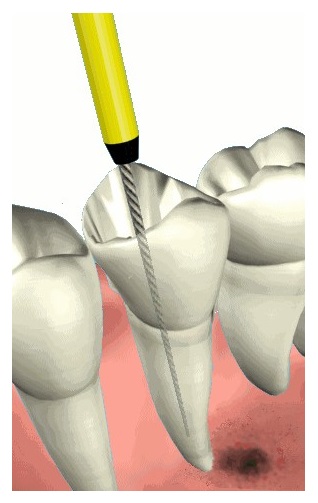
The aim of root canal treatment is to remove infection from inside the tooth, relieve symptoms and, wherever possible, save the natural tooth.
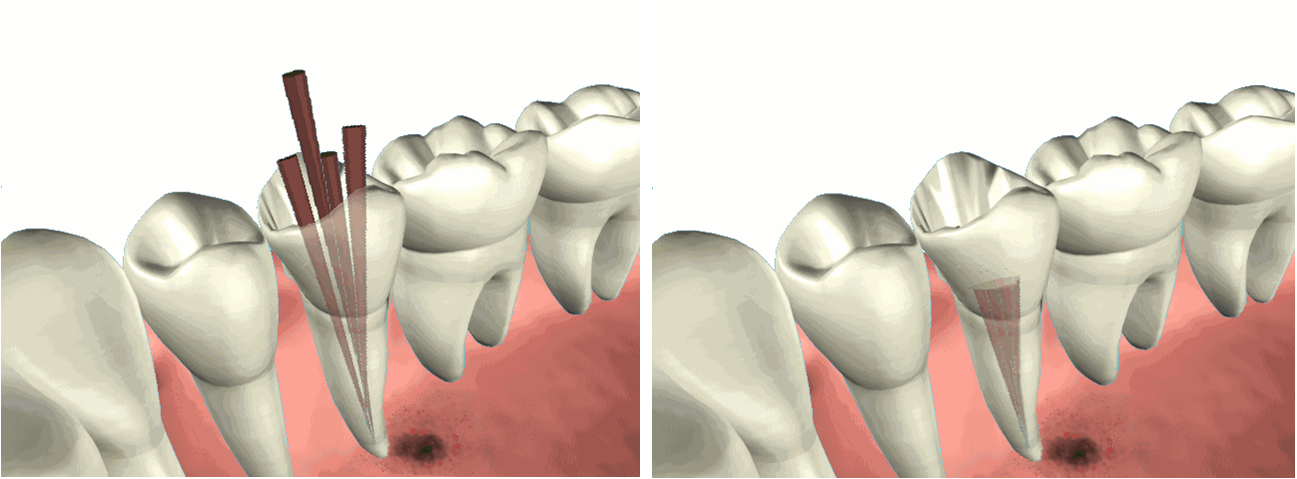
During treatment, the infected or damaged tissue (pulp) is carefully removed from inside the tooth. The root canals are then thoroughly cleaned, shaped and disinfected before being sealed with a special filling material to help prevent further infection.
Root canal treatment is a skilled procedure and, depending on the complexity of the tooth, may be completed in one appointment or require more than one visit.
- We will:
- Make the tooth comfortable using local anaesthetic.
- Carefully access the root canals and remove infected or damaged tissue.
- Clean, disinfect and shape the canals using very fine instruments.
- Take X-rays during treatment when necessary to assess the tooth and root canals.
- In more complex cases, 3D CBCT imaging may be recommended to provide additional information about the roots, surrounding tissues or possible areas of infection.
- Seal the root canals once they have been thoroughly cleaned and prepared.
If treatment is being carried out over more than one appointment, a temporary filling and medication may be placed inside the tooth between visits.
Once root canal treatment has been completed, the tooth will need to be restored with a permanent filling or, in some cases, a crown or other restoration to protect it and restore normal function.
It is quite normal for the tooth to feel slightly tender for a few days following treatment. This usually settles gradually and can often be managed with your usual over-the-counter pain relief, where suitable for you.
Advanced assessment and treatment
For more complex cases, detailed assessment and magnification can be extremely valuable.
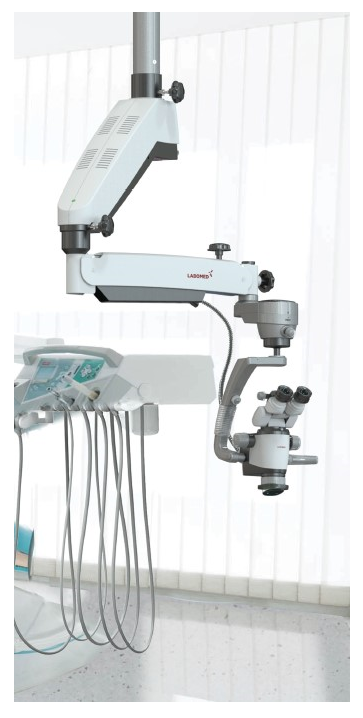
At Lancaster House Dental Practice, we use an advanced specialist dental microscope which can identify intricate root canal anatomy that magnification loupes worn by dentists cannot pick up. This helps with accurate diagnosis and plan treatment accurately.
Where appropriate, we will use cone beam CT (CBCT) scanning which can provide a detailed three-dimensional view of the tooth and surrounding structures. This can be particularly helpful in complex cases, previously root-treated teeth or when conventional X-rays do not provide all the information needed.
Do all dentists use a microscope and cone beam CT (CBCT)?
Only specialists or dentists with a special interest in this complex treatment will use them. We’re very pleased to have dentists of that calibre offering this treatment for our valued patients.
What are the alternatives to root canal treatment?
Without treatment the pain will continue or get worse, the infection may also spread into the jaw bone leading to an abscess.
Extraction – removing the tooth is a realistic option especially if the tooth is badly damaged, not used during chewing or has gum disease around it.
When a tooth has become infected, unfortunately the infection will not normally heal by itself. Without treatment, pain may continue or become worse, and the infection can spread beyond the tooth into the surrounding bone, sometimes resulting in an abscess.
Where the tooth can be successfully treated, root canal treatment offers the opportunity to remove the infection while keeping your natural tooth. Whenever possible, preserving your own tooth is usually preferable to losing it, as it helps maintain normal chewing function and avoids leaving a gap.
The main alternative is extraction, which means removing the tooth completely. This may be the most appropriate option if the tooth is too badly damaged to restore, has a poor long-term prognosis, or has significant gum disease.
However, once a tooth has been removed, the space may subsequently need to be replaced with a dental implant, bridge or denture. This can involve additional treatment, appointments and cost.
For this reason, if we believe your tooth has a reasonable chance of being successfully saved, we will discuss root canal treatment as an option to help you keep your natural tooth for as long as possible.
Before and After
Endodontic cases treated at Lancaster House Dental Practice by Dr Yogesh Patel
Before & After Case 1
Saving a complex upper molar tooth
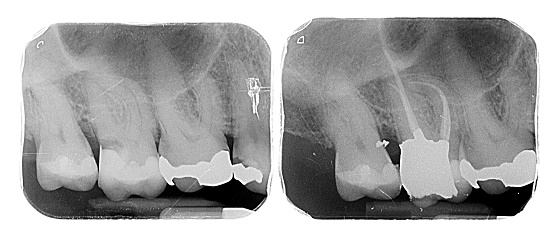
This upper molar had extensive decay and a significantly curved root, making root canal treatment particularly challenging. The patient’s dentist recognised the complexity of the case and referred the patient to us for further treatment.
Using specialist endodontic equipment and techniques, we were able to carefully navigate the curved root canals, remove the infection and successfully complete the root canal treatment.
Most importantly, the natural tooth was saved. The patient was very pleased with the outcome and returned to their own dentist to have the tooth protected with a crown.
Before & After Case 2
Helping to save a difficult tooth with blocked canals
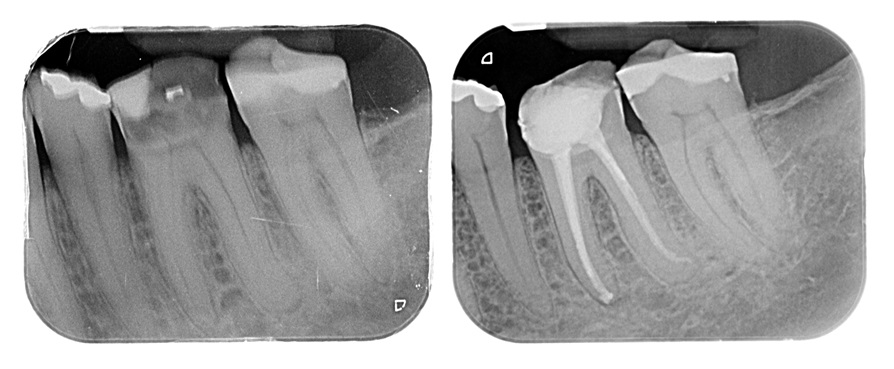
This patient was referred to us after their dentist had started root canal treatment but found that the root canals were particularly narrow and difficult to access.
Using specialist endodontic equipment, techniques and materials, Dr Yogesh Patel was able to carefully locate and treat the complex root canals and successfully complete the root canal treatment.
The patient was delighted that the tooth could be saved, as they had previously thought that extraction might be their only option.
Before & After Case 3
Saving a previously root-treated tooth
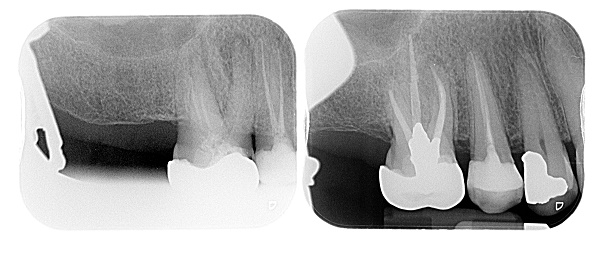 This patient had previously undergone root canal treatment, but unfortunately the tooth had developed problems and the treatment was beginning to fail. Their dentist referred them to Lancaster House Dental Practice to see whether the tooth could still be saved.
After carefully assessing the tooth, Dr Yogesh Patel carried out specialist root canal retreatment, removing the previous root filling, thoroughly cleaning and disinfecting the root canals, and then carefully refilling them.
The treatment was successful and, most importantly, the patient was able to keep their natural tooth rather than having it extracted.
The patient then returned to their own dentist to have the crown replaced and complete the restoration of the tooth.
Before & After Case 4
Saving a difficult-to-reach back tooth
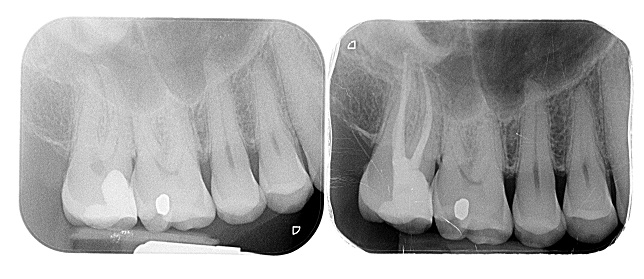 This patient was referred to Dr Yogesh Patel after developing an infection in a second molar at the very back of the mouth. These teeth can be particularly challenging to root treat because of their difficult position and limited access.
In some cases, extraction may be considered when treatment is especially difficult. However, using specialist endodontic equipment and techniques, Dr Patel was able to access the tooth, carefully treat the infected root canals and successfully complete the root canal treatment.
The treatment was successful and, most importantly, the patient was able to keep their natural tooth rather than having it removed.
Before & After Case 5
Saving a tooth with fine and curved canals
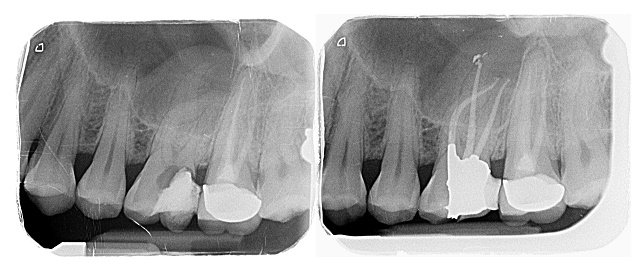 This patient was referred to Dr Yogesh Patel because the tooth had extremely fine and curved root canals, making conventional root canal treatment particularly challenging.
Using specialist endodontic equipment and techniques, Dr Patel was able to carefully locate, navigate and treat the complex canals successfully.
Most importantly, the tooth was saved and extraction was avoided. Following treatment, the tooth was restored with a crown to help protect it for the future.
Before & After Case 6
Saving a tooth with a fractured instrument
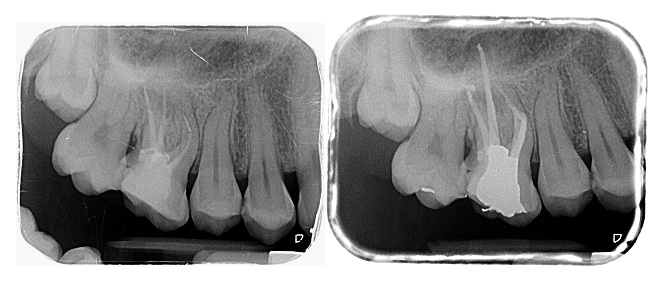 This patient had a failing root canal treatment, and their dentist identified that a small piece of a root canal instrument had fractured and remained inside one of the roots. The patient was referred to Dr Yogesh Patel for specialist treatment.
Using specialist endodontic equipment and techniques, Dr Patel was able to carefully remove the fractured instrument, thoroughly clean and disinfect the root canals, and successfully redo the root canal treatment.
The patient was delighted with the outcome and, most importantly, the natural tooth was successfully saved.
Are you worried that a tooth may need to be removed?
If you have been told that a tooth requires root canal treatment, has previously had unsuccessful root canal treatment or may need to be extracted, an endodontic assessment may help establish whether the tooth can be saved.
Book an Endodontic Assessment
Call Lancaster House Dental Practice on 020 8771 2020
Specialist care for more complex dental extractions
Lancaster House Dental Practice is a Minor Oral Surgery referral centre, providing treatment for patients who need more complex dental extractions and minor surgical procedures.
Your dentist may refer you to us when a tooth is difficult to remove in a general dental practice, for example because of its position, shape or complexity.
Q. What treatments do we provide?
A. Our Minor Oral Surgery service includes:
• Difficult and surgical tooth extractions
• Wisdom tooth removal
• Removal of retained or broken roots
• Other minor oral surgical procedures where appropriate
Q. What happens if I am referred?
A. If your dentist refers you to Lancaster House Dental Practice, our experienced team will assess your referral and arrange the appropriate appointment.
Most procedures are carried out comfortably using local anaesthetic, so the area is completely numb during treatment.
Following treatment, we will provide you with clear aftercare instructions and, where appropriate, you will return to your own dentist for your ongoing dental care.
NHS Minor Oral Surgery referrals
We accept eligible NHS Minor Oral Surgery referrals from dentists for treatments that fall within the NHS referral criteria.
More complex cases that require hospital-level care or investigations may need to be referred to a hospital Oral & Maxillofacial Surgery department.
If your dentist feels that you require specialist-level oral surgery, they can refer you directly to our team at Lancaster House Dental Practice.
Please note that patients cannot refer themselves on the NHS and must be referred to us by their dentist. Patients can refer themselves directly for private minor oral surgery only.
Helping you keep your gums healthy and protect your teeth
Healthy gums are essential for healthy teeth. Gum disease is very common and, if left untreated, can gradually damage the gums and bone that support the teeth.
At Lancaster House Dental Practice, we can assess your gum health, provide treatment for gum disease and help you maintain healthy gums for the future. Where gum disease is more advanced or complex, we can also arrange referral to a Periodontist for specialist assessment and treatment.
Q. What is gum disease?
A. Gum disease is usually caused by a build-up of plaque and bacteria around the teeth and beneath the gum line.
In its early stages, known as gingivitis, the gums may become red, swollen or bleed when brushing. If the condition progresses, it can develop into periodontitis, where the tissues and bone supporting the teeth begin to be affected.
Without appropriate treatment, this can eventually result in teeth becoming loose or being lost.
Q.What are the signs of gum disease?
A. You may notice:
• Bleeding gums when brushing or flossing
• Red, swollen or tender gums
• Receding gums
• Persistent bad breath
• Gaps developing between your teeth
• Teeth becoming loose or changing position
Gum disease does not always cause pain, particularly in its earlier stages, so regular dental examinations are important for detecting problems before they become more advanced.
Q. How is gum disease treated?
A. Treatment depends on the severity of the condition.
For many patients, treatment involves improving daily cleaning techniques together with professional cleaning to remove plaque and deposits from around and beneath the gums.
Where periodontal disease is more established, deeper cleaning below the gum line (root surface debridement) may be required.
Following treatment, we will reassess your gum health and advise you about ongoing maintenance. Regular hygiene appointments and good cleaning at home are particularly important in keeping periodontal disease under control.
Q. When might I need to see a Periodontist?
A. Some cases of gum disease require more advanced care.
If your periodontal condition is particularly severe or complex, or is not responding as expected to treatment, we may recommend referral to a Periodontist.
A Periodontist is a dentist with advanced training and expertise in the diagnosis and treatment of conditions affecting the gums and the structures supporting the teeth.
Depending on your individual needs, specialist treatment may include advanced non-surgical periodontal treatment and, where appropriate, surgical or regenerative procedures.
We will discuss this with you before making a referral and explain why we feel specialist care may be beneficial.
Q. Can gum disease be cured?
A. Early gum disease can often be reversed. More advanced periodontal disease cannot always be completely reversed, but with appropriate treatment and good ongoing care it can often be successfully controlled. The key is maintaining excellent oral hygiene and attending regular dental and hygiene appointments so that your gum health can be monitored.
Worried about your gums?
If you have bleeding or receding gums, persistent bad breath, loose teeth, or have previously been told that you have gum disease, please speak to our dental team.
We can assess your gum health, discuss the treatment options available and, where appropriate, arrange a referral for specialist periodontal care.
Our aim is to help you maintain healthy gums and keep your natural teeth for as long as possible.

